

The Kyoto Peace Conference 2025 at Kyoto University, Japan, provided an interesting platform for reflecting on how inner peace can be cultivated, questioned, and redefined through interdisciplinary encounters. Our panel “Peace of Mind and Interdisciplinary Exchanges,” chaired by Dr. Charlène Clonts (Kyushu University), brought together four distinct yet complementary approaches to the study of peace, well‑being, and knowledge creation.
Through historical analysis, embodied practices, and arts‑based well‑being research, the panel explored peace of mind not as a fixed state but as a dynamic process shaped by cultural narratives, sensory experience, and the evolving demands of contemporary life. The session emphasized that peace of mind emerges through the interplay of personal and collective dimensions — a theme that resonated across all contributions.
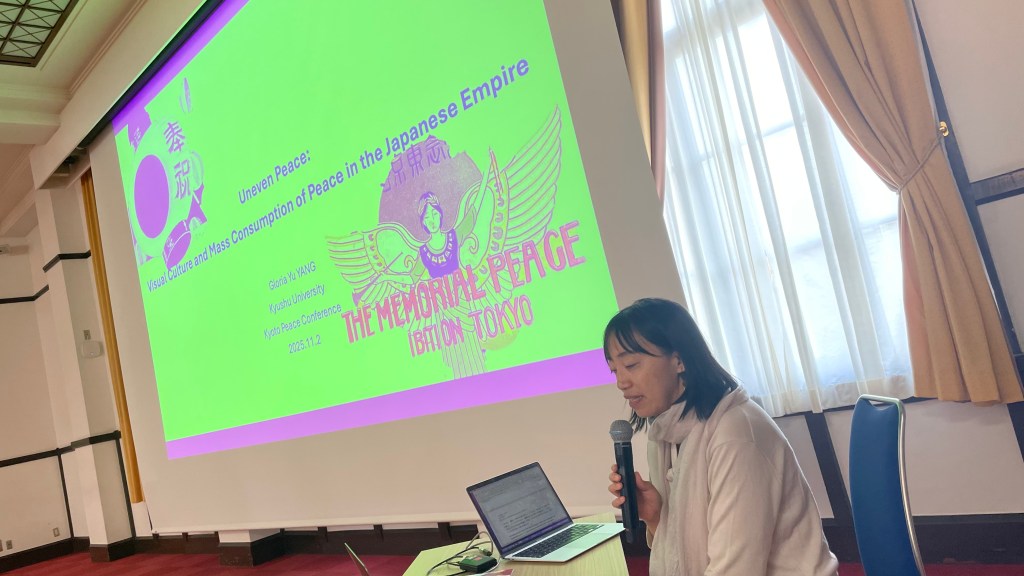
Uneven Peace of Mind: Propaganda and the Visual Representation of Peace in the Japanese Empire
Speaker: Dr. Gloria Yu Yang (Kyushu University)
Gloria Yu Yang analyzed how “peace” (平和) was represented and instrumentalized in Japan and its occupied regions in the early twentieth century, comparing the Peace Memorial Exposition (Tokyo, 1922) with the 2,600th Anniversary of the Founding of Japan events (Tokyo, 1940). Her comparative reading of display strategies and textual/visual materials shows a shift from a 1920s rhetoric of international engagement to a 1940s mobilization of “peace” in service of imperial expansion and wartime participation—revealing the uneven, politically charged evolution of the term across media.
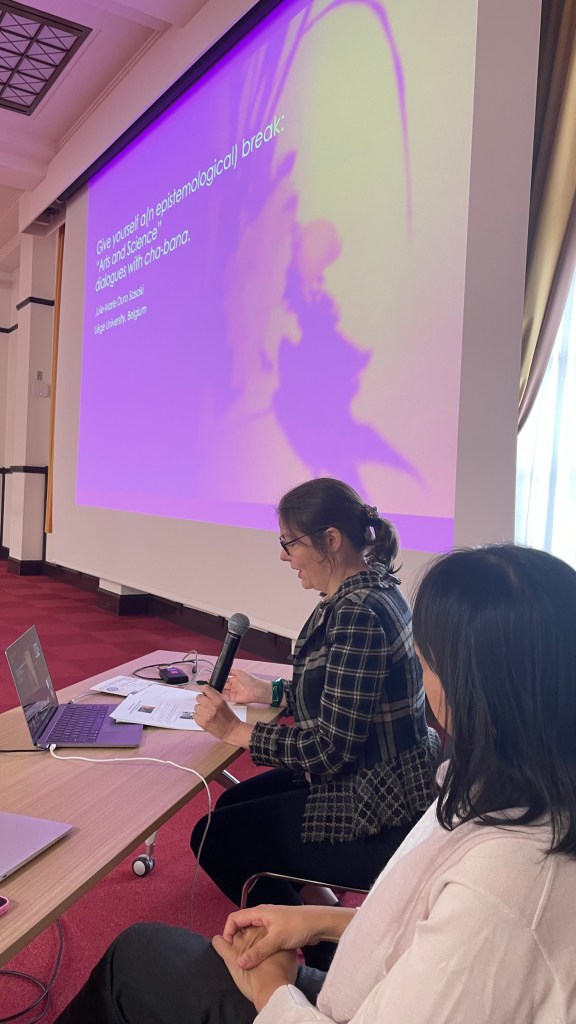
Give Yourself an (Epistemological) Break: Arts and Sciences Dialogues with Cha‑bana
Speaker: Julie‑Marie Duro‑Sasaki (University of Liège, Belgium)
Julie‑Marie Duro‑Sasaki situated cha‑bana—the seasonal flower arrangement associated with the tea ceremony and present in washoku settings—as both a practice of inner peace and a metaphor for epistemic inquiry. Drawing on situated knowledges (Haraway), relational epistemology (Despret), pragmatism (Dewey), and somaesthetics (Shusterman), she argued that cha‑bana models sensitive, relational, and rigorous knowledge‑making rooted in embodied gestures, seasonality, and space—opening a path toward interdisciplinary dialogue through “solidary divergences.”
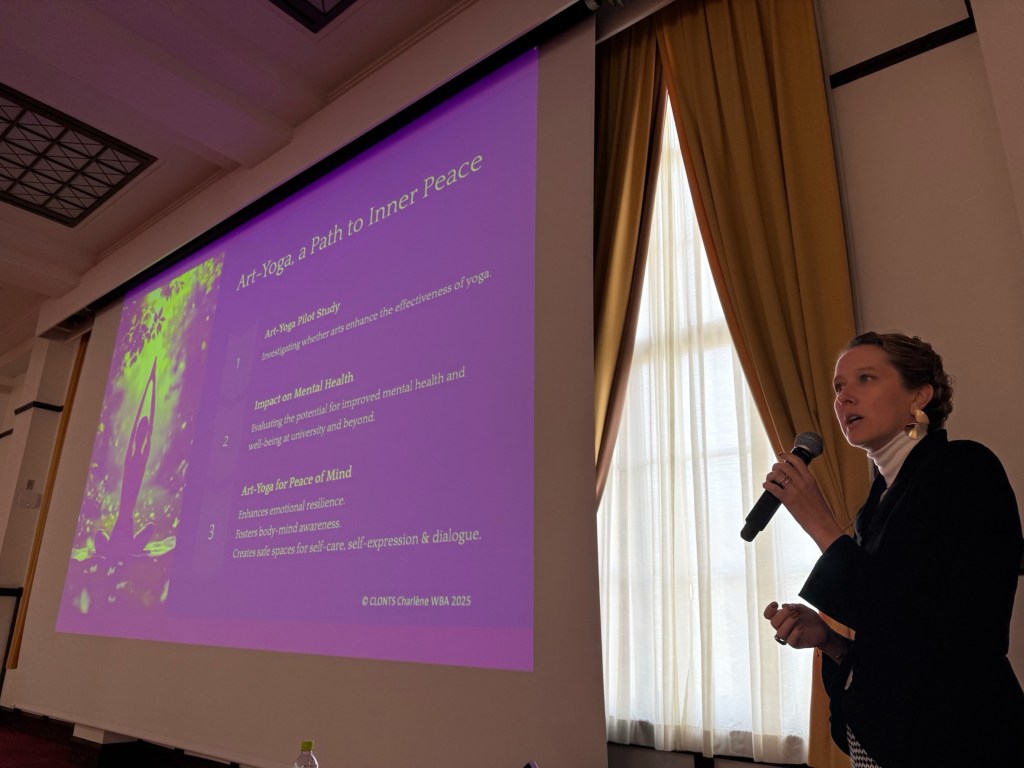
Well‑Being with Arts: Peace of Mind Through an Interdisciplinary Approach
Speaker: Dr. Charlène Clonts (Kyushu University)
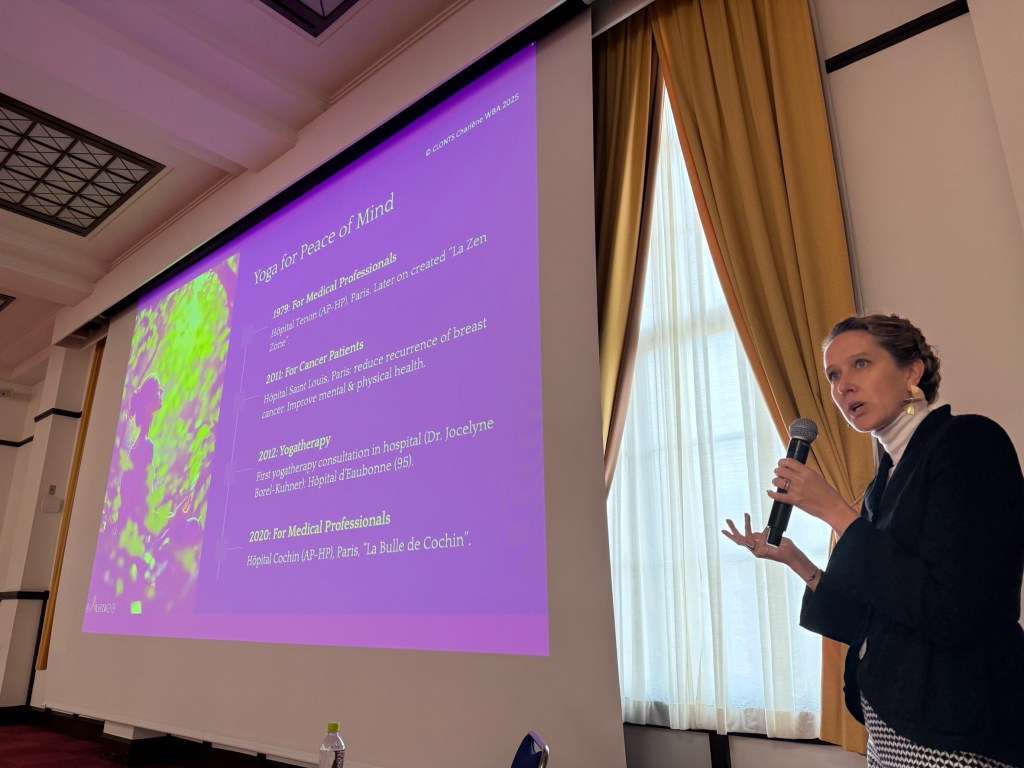
Dr. Charlène Clonts presented Well‑Being with Arts (WBA) project—funded by Q‑AOS—which studies how literary imagery, music, and dance integrated into yoga can enhance emotional well‑being and peace of mind in university contexts during and after COVID‑19. Using a mixed‑methods design (surveys, interviews, observation, literature analysis) and an Art‑Yoga pilot delivered in multi‑month sequences, preliminary results indicate improved stress reduction, self‑awareness, and inner tranquillity. Milestones include ethical approval, international collaborations, a Body–Mind Interactions symposium, the edited volume Exploring Body‑Mind Interactions and Their Impact on Well‑Being: Holistic Practices, and the community initiative “Forest Art‑Yoga & Meditation for Medical Professionals.” Future directions: expanding the network, publishing peer‑reviewed findings, and implementing campus‑based educational programs.
Well‑Being, Peace of Mind, and Journalism Safety
Speakers: Dr. Charlène Clonts (Kyushu University) & Prof. Barış Çoban (Doğuş University)
This contribution reframed journalism safety beyond external threats (violence, censorship, suppression) to include well‑being and peace of mind as foundational to a free press. Grounded in the WBA framework, the study draws comparative insights from Turkey and Japan, where journalists face, respectively, political pressures/systemic constraints and intense work cultures/social expectations. Through qualitative analysis and arts‑based body‑mind interventions (meditation, holistic practices, creative self‑expression), the research argues that integrating peace of mind into safety strategies strengthens stress resilience, emotional regulation, and ethical decision‑making—mitigating burnout and self‑censorship while reinforcing journalism’s role in truth and accountability. The paper calls for a paradigm shift: embedding well‑being into media institutions, advocacy, and policy as a condition of press freedom and a contributor to social peace.
Closing Perspective
Taken together, the panel’s four approaches converge on a shared insight: peace of mind is not a static endpoint. It is continuously co‑created—by images and narratives, by embodied practices and relational epistemologies, by research‑led interventions in education and care, and by professional environments that safeguard integrity as well as health.
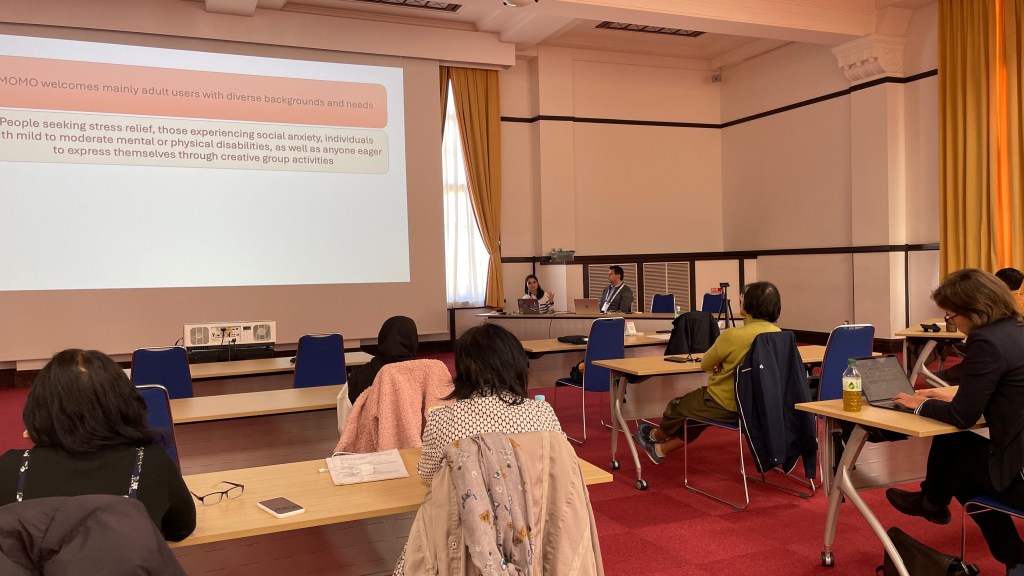
We were also delighted to be able to exchange with psychiatrists from Myanmar, art therapists from Japan, researchers from Europe and South America. All sharing the same desire for more peacefulness.
Author: Associate Prof. Dr. Charlène Clonts
Well-Being with Arts project
Kyushu University, Ito Campus, 744 Motooka, Nishi-ku, 819-0395 Fukuoka, JAPAN
A Kyushu University Institute for Asian and Oceanian Studies (Q-AOS) research module.
Copyright 2024 © Clonts Charlène WBA
Fièrement propulsé par WordPress
 Well-Being with Arts project