
8 November 2025 · Ohashi Campus, Design Commons (Kyushu University)
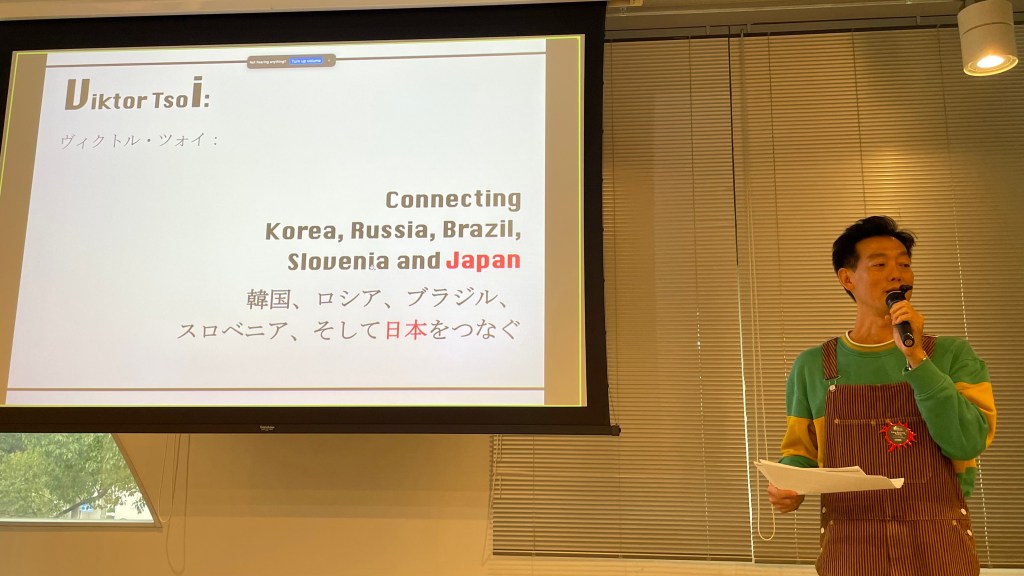
When we welcomed Rachid (Rashid) Nougmanov (Nugmanov) to Kyushu University this autumn, the room carried more than the presence of a celebrated filmmaker; it carried the lingering pulse of Viktor Tsoi—musician, actor, and indelible force at the heart of Nougmanov’s 1988 film The Needle. Even for those who know the film by memory, encountering the director in person reshapes the experience: the collaboration between Nougmanov and Tsoi becomes less a chapter in cultural history and more a living conversation about sound, image, and the ways a story enters the body (Nougmanov’s film starred Tsoi and helped define the Kazakh New Wave).
A gathering with history in the room
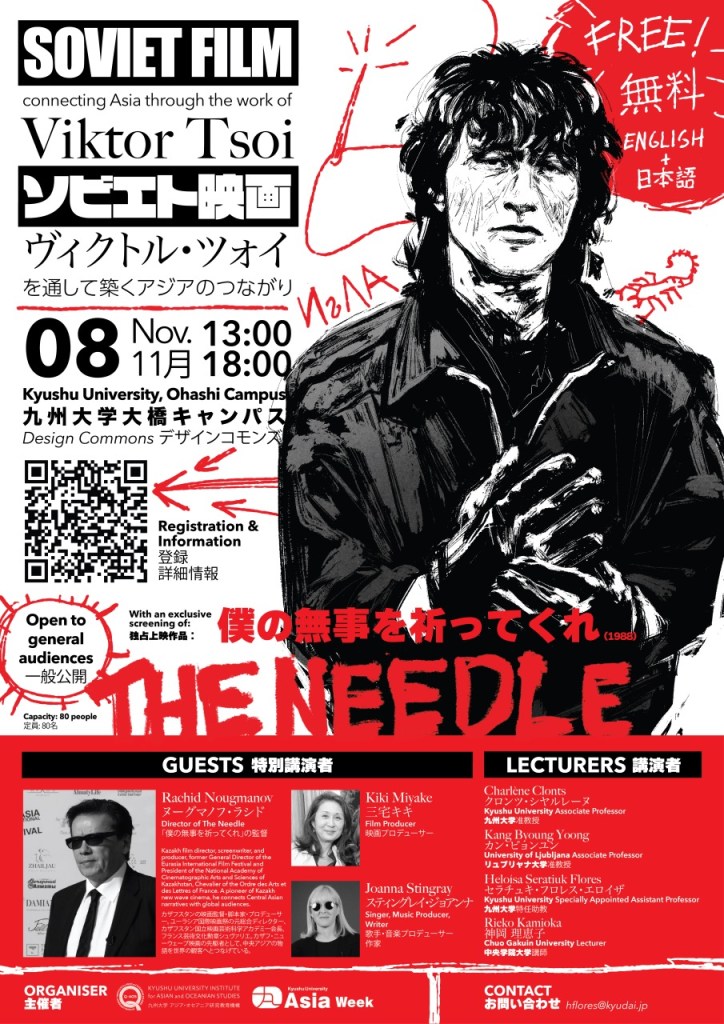
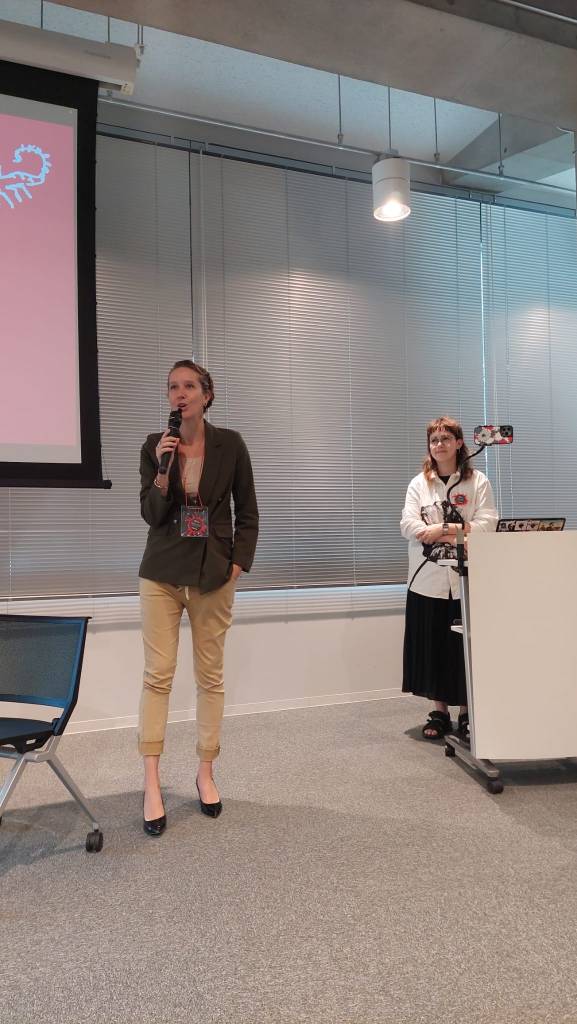
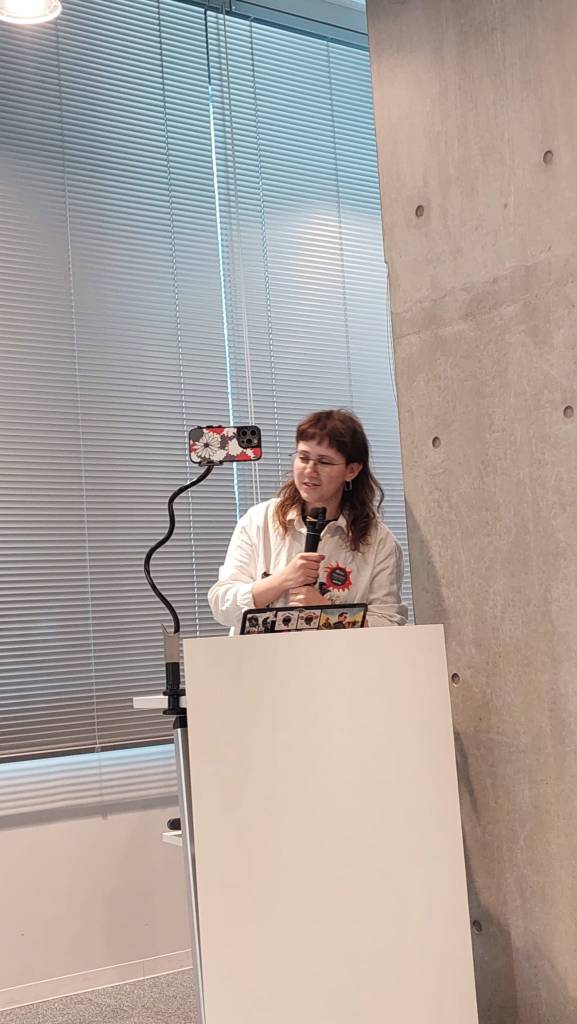
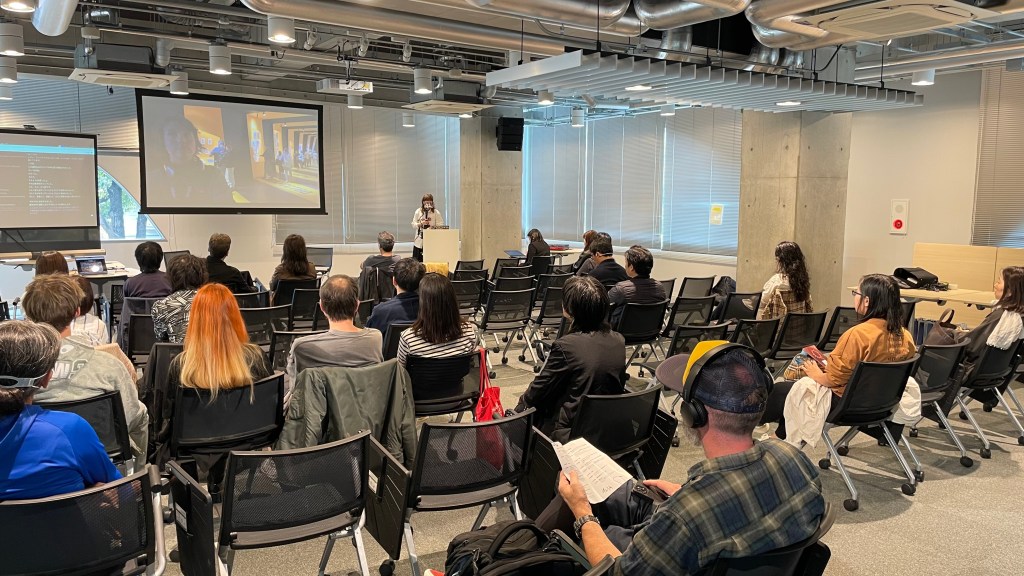
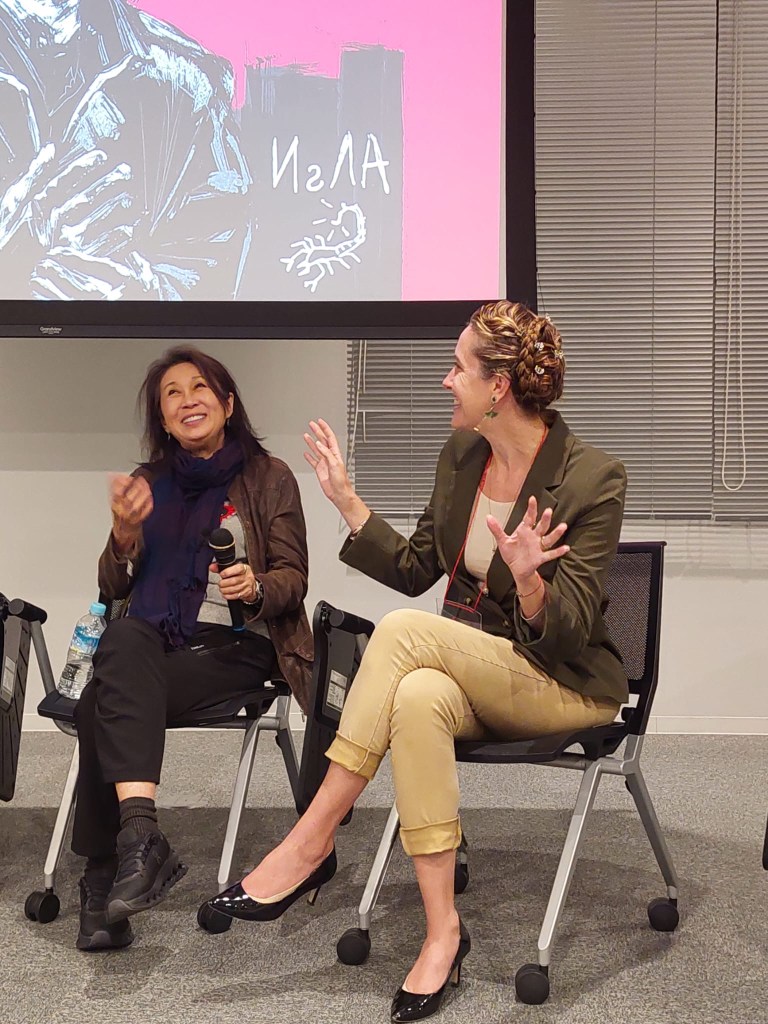
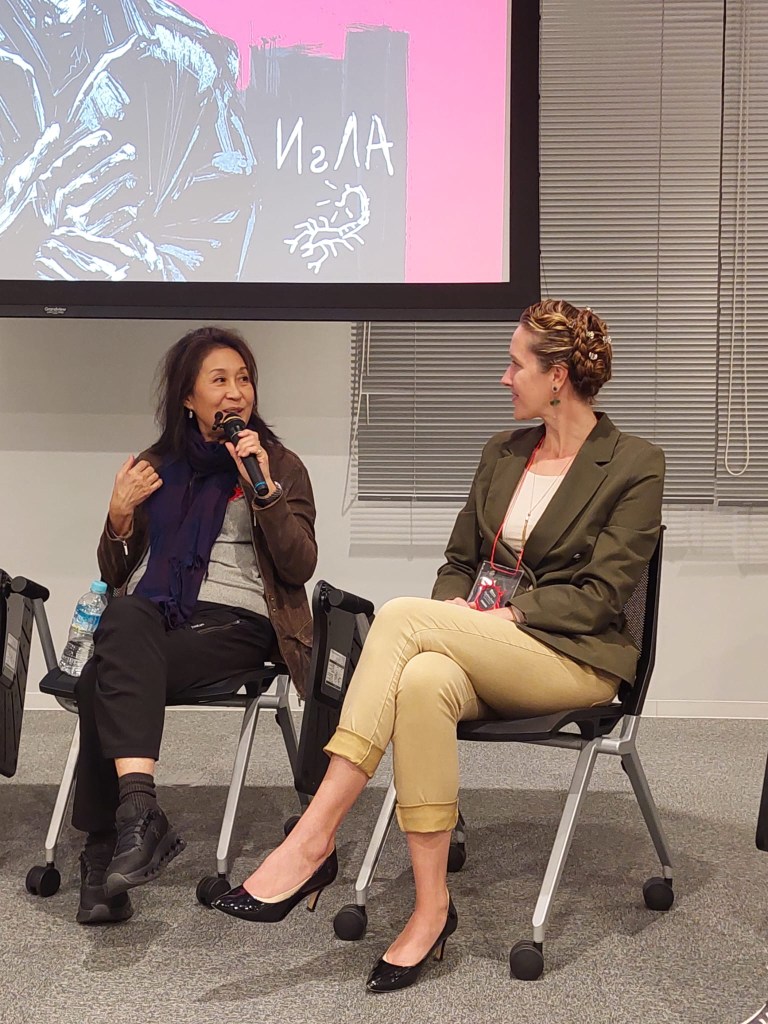
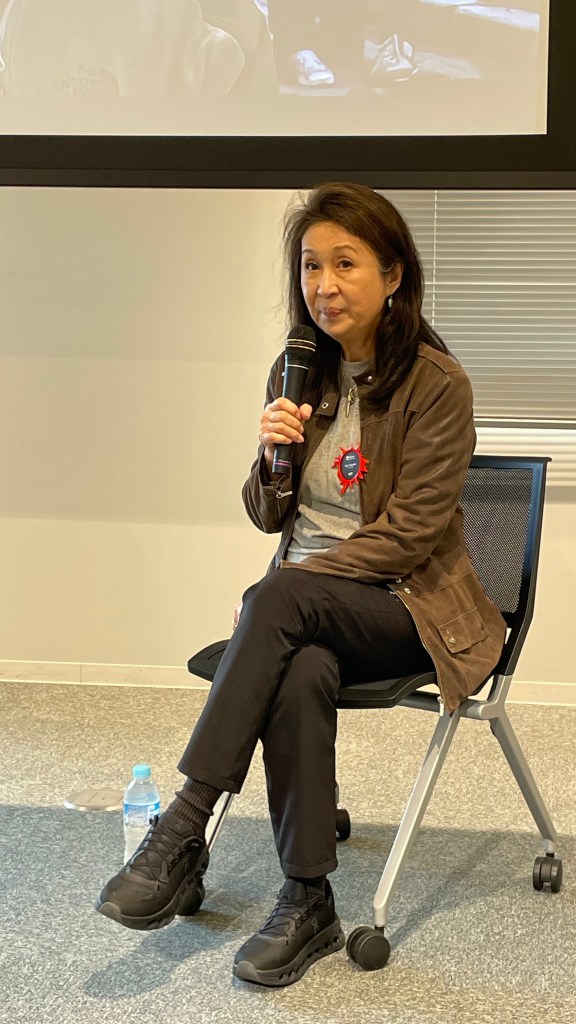
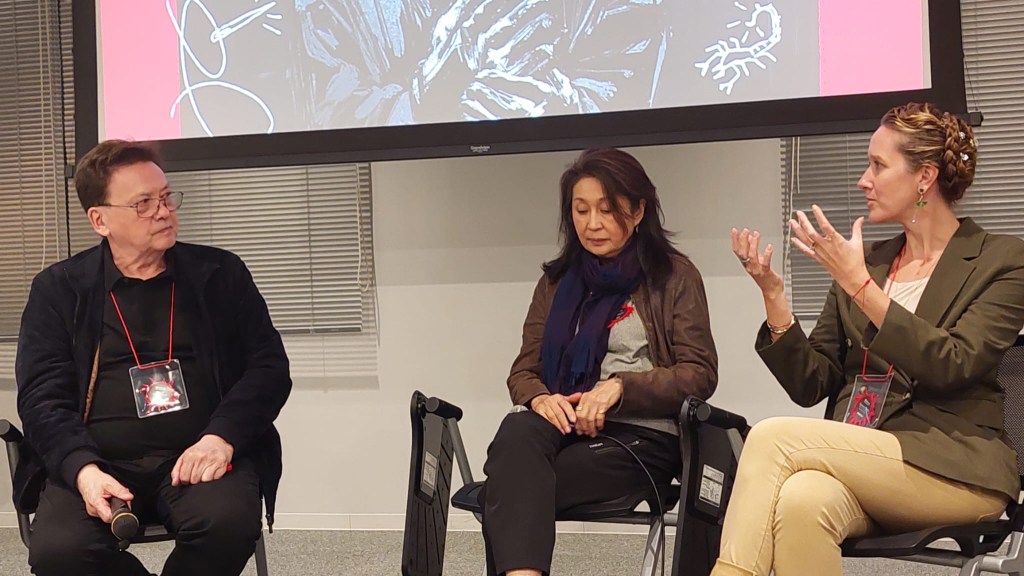
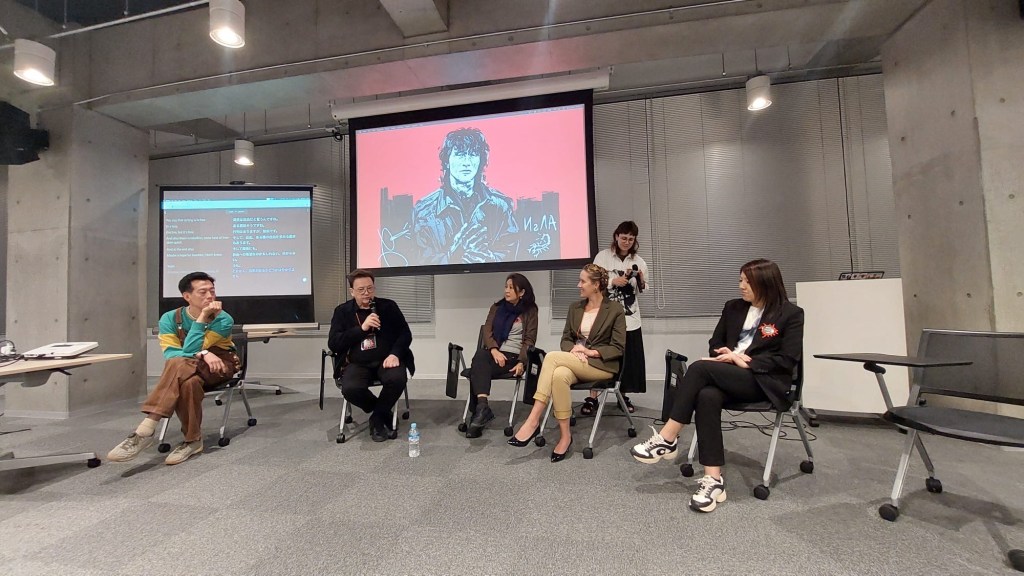
The event took place on 8 November 2025 (13:00–18:00), at Design Commons, Ohashi Campus, as part of the Asia Week (Q-AOS), co-funded by Dr. Heloisa Seratiuk Flores (main organizer) and Dr. Charlène Clonts (WBA project). It was open to the public (capacity 80), which gave the evening a porous, generous feel: students, colleagues, local and global audiences (the event attracted people from all over Japan) shared the same space of attention.
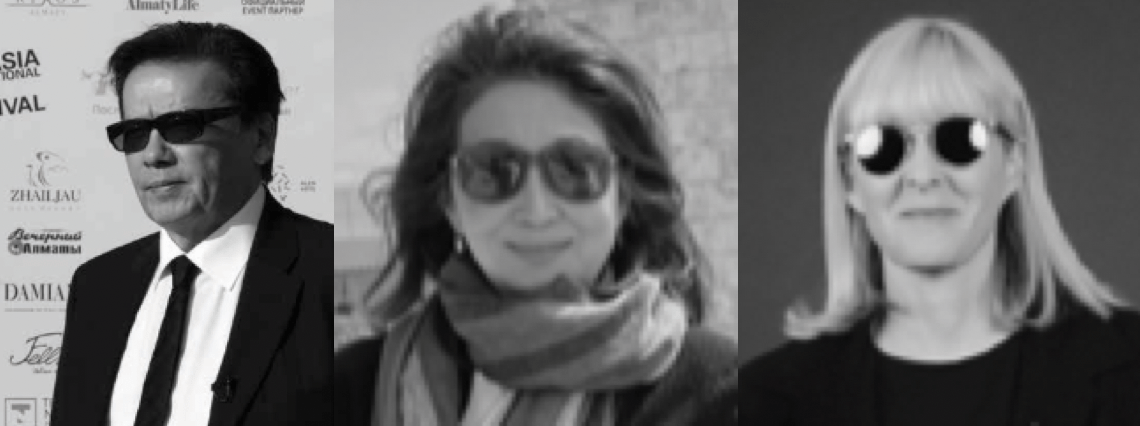
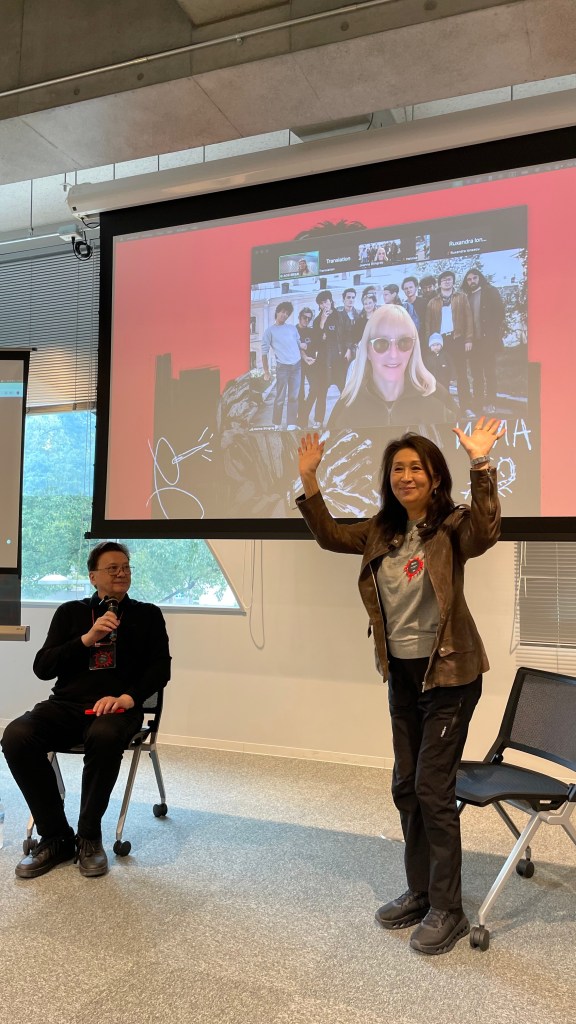
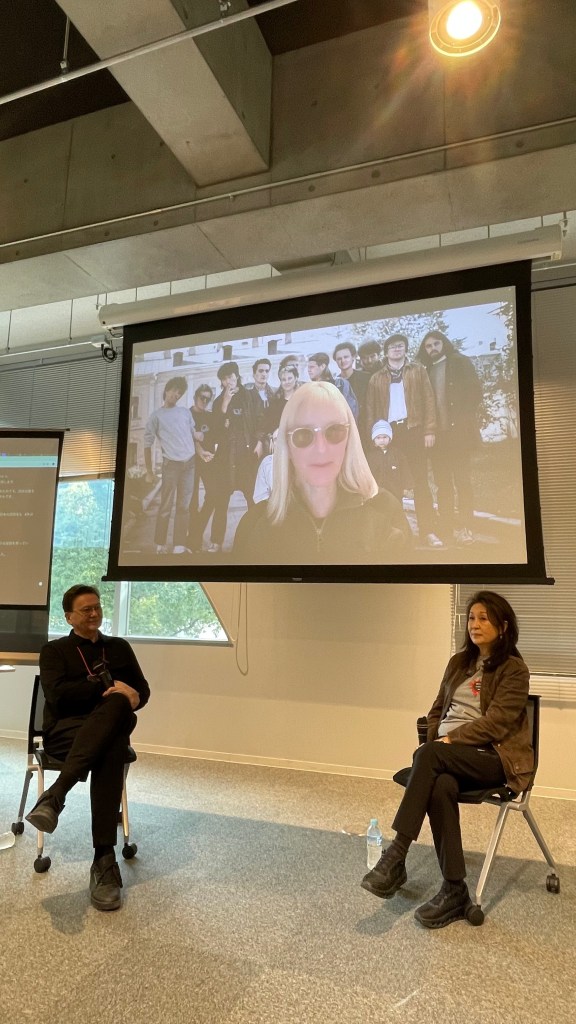
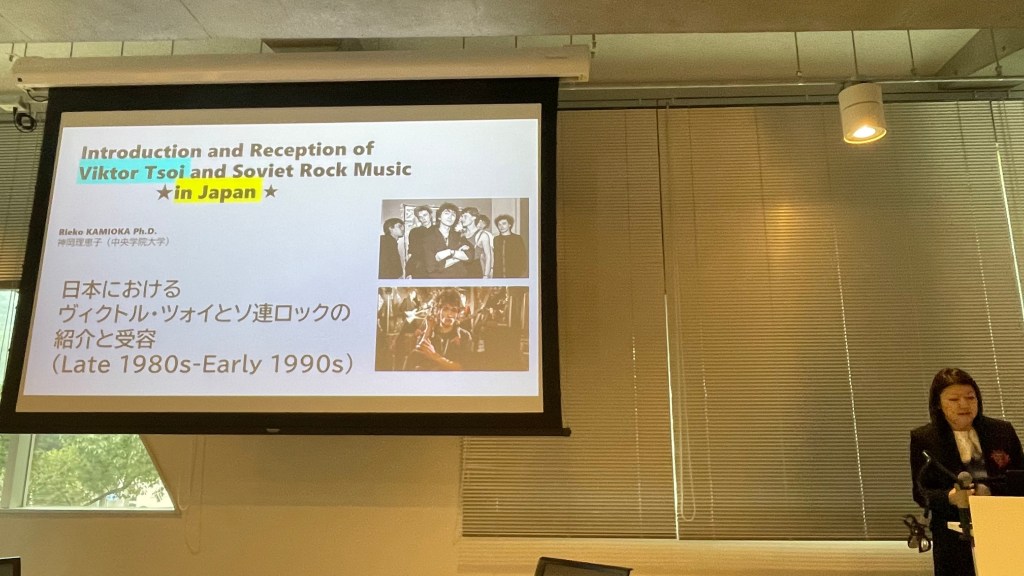
Alongside the director, we welcomed Kiki Miyake (film producer), Joanna Stingray (singer, producer, writer), Kang Byoung Yoong (University of Ljubljana), Heloísa Seratiuk Flores (Kyushu University), Charlène Clonts (Kyushu University), and Rieko Kamioka (Chuo Gakuin University)—a constellation that reflected the event’s international scope.
As the introductions settled, The Needle returned to the foreground: its fractured tempo, its architectural frames, and Tsoi’s sonic presence as Moro, threading music through a city’s porous surfaces. (Tsoi’s starring role and the film’s position in late‑Soviet cinema are well documented.)
WBA contribution
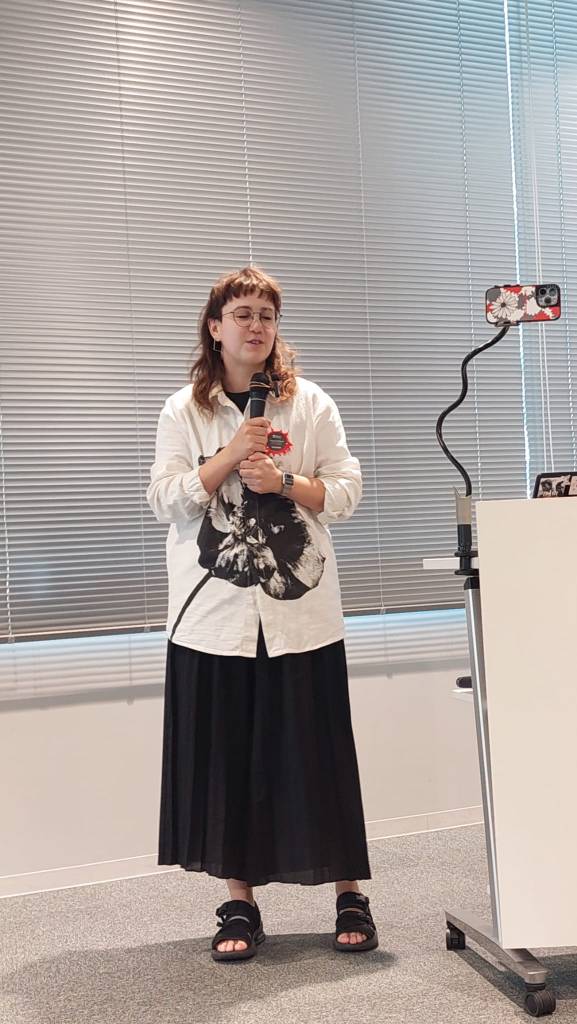
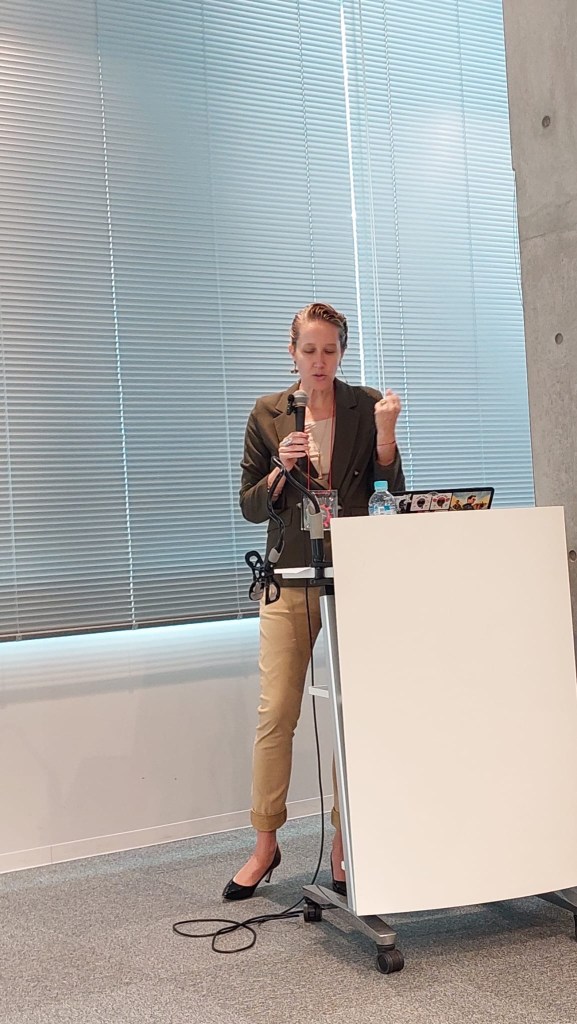
Dr. Charlène Clonts guest speakership “Intermedia Practice as Resilience: Trauma & Voices from the Margins” approached The Needle as a polyphonic work: a film that resists a single voice by assembling many (music, montage, pop‑graphic inserts, the city’s objects as living debris). She traced how the film’s associative editing, ironic tonal shifts, and spatial design metabolize trauma—not by explaining it, but by letting it reverberate through image and sound.
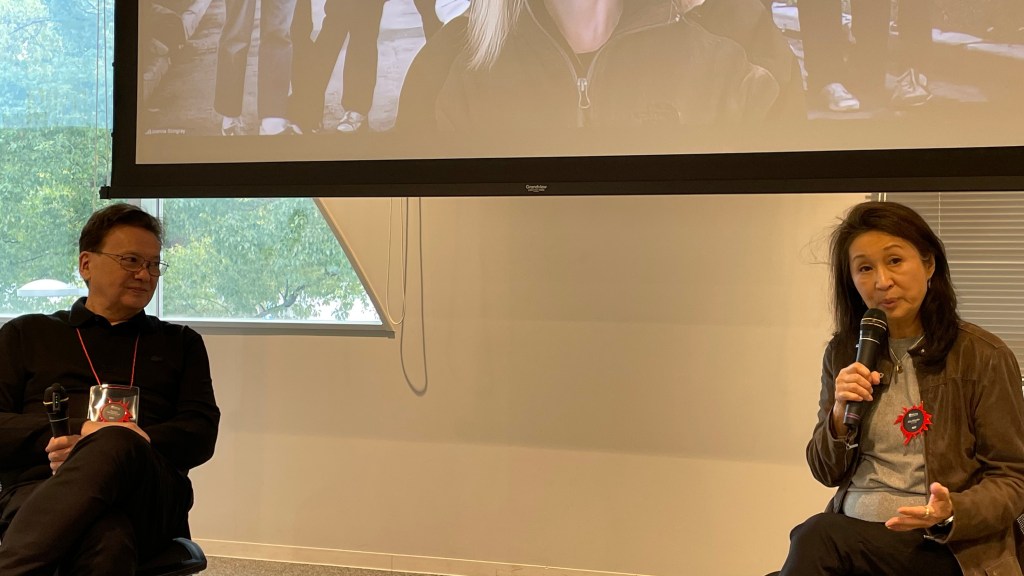
The discussion that followed during the Roundtable—curious, generous, joyful, and sometimes quietly moved—reminded us why these encounters matter. We spoke about what remains after a film finishes: the rhythms that still echo, the images that return without knocking. And inevitably, we circled back to Tsoi—not only as an icon, but as a timekeeper for the film’s emotional weather.
Hearing Nougmanov reflect on this period only months after he was formally recognized as Chevalier de l’Ordre des Arts et des Lettres by the French Ministry of Culture added a quiet resonance to the evening; the distinction acknowledges both his artistic contribution and the cultural bridges his work has helped build. (Ceremony held at the French Ambassay in mid‑July 2025, in Almaty, Kazakhstan)
Why this night belongs in the WBA story
Well‑Being with Arts often engages with performance and somatic practices; this event during the Asia Week widened that lens to cinematic embodiment. How do sound and space choreograph collective attention? How does a film hold grief, irony, and resilience without resolving them? These questions sit comfortably within WBA’s health‑humanities focus, where form is never neutral and experience is designed—sometimes with a camera, as much as with movement or voice.
Author: Associate Prof. Charlène Clonts
Well-Being with Arts project
Kyushu University, Ito Campus, 744 Motooka, Nishi-ku, 819-0395 Fukuoka, JAPAN
A Kyushu University Institute for Asian and Oceanian Studies (Q-AOS) research module.
Copyright 2024 © Clonts Charlène WBA
Fièrement propulsé par WordPress
 Well-Being with Arts project