
Kyushu University, Q-AOS Health Cluster
The Well-Being with Arts (WBA) project has completed a transformative 2025-2026 academic year, marked by new research breakthroughs, innovative teaching methods, international collaborations, and creative community engagement. Developed at Kyushu University, Japan, the project investigates how the arts (when integrated with holistic practices) can support emotional well-being and resilience in higher education.
In a context where students and staff continue to face stress, digital fatigue, and cultural uncertainties amplified by the post‑COVID era, WBA positions the arts as a meaningful, research-backed pathway to strengthening well-being and inclusion. Read below the poster presented at the end of February 2026, at the Imamori Hall, Kyushu University, or read below the sum-up of our achievements this past Japanese academic year (from April 2025 to March 2026).
1. Research Highlights: Advancing Knowledge in Arts & Health
This year, WBA made significant contributions to the emerging field of arts for health in East Asia, an area that remains under-researched despite clear needs. According to the project’s compiled achievements, WBA conducted mixed-methods data collection, submitted two grant proposals including KAKENHI (the latter national Japanese grant was granted at the beginning of March!! Proud to have been selected by the Japanese national Society for Research), and published three peer‑reviewed articles, among them the first scientific results of the Art‑Yoga pilot study and a case study based on the Istanbul implementation.
Art‑Yoga Pilot Study: What We Learned
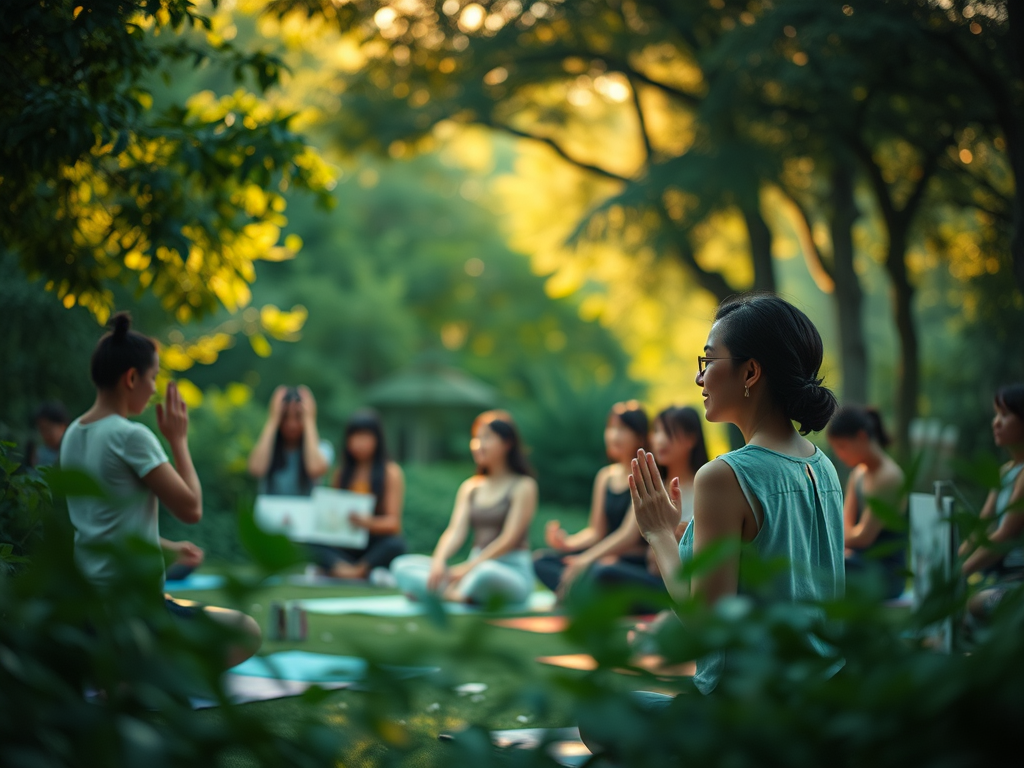
The study explored whether the combination of arts (dance, music, poetry, visual art) and yoga can promote emotional well-being among university students, staff and faculty members. Results showed no significant difference in health literacy between attendance groups, but participants reported strong emotional benefits, such as inner clarity, emotional release, and subtle social bonding, with happiness rising to a median of 8 and peacefulness reaching a median of 7.5. Effects were mostly short‑term, pointing to the importance of continuity in such programs.
These encouraging findings suggest that culturally responsive, creative practices can support emotional regulation and self-care in Japanese university contexts.
Reference: Clonts Ch.*, Kishimoto H., Niu T., Kawata N., Yokota F. (2026), “Art-Yoga for Well-Being, Awareness, and Self-Care in Higher Education: First Data Analysis of a Pilot Study in a Japanese University”, 基幹教育紀要 [Bulletin of KIKAN Education], no. 12, Kyushu University, March 2026, 131-147.
2. Educational Innovation: Teaching with Creativity at the Core
WBA integrates its research into pedagogy and curriculum design. This year’s achievements include a university‑level course on Health, Well‑Being & Happiness in French Society, a series of Art‑Yoga-based participatory performances (notably during the Interwoven Bodies exhibition at Fujii Gallery), and a 3.5‑month Visiting Professorship from Istanbul, which enriched interdisciplinary learning at Kyushu University.
These initiatives offer to many people opportunities to experience well-being as a creative, embodied, shared practice, beyond conventional academic frameworks.
3. Conferences, Keynotes & International Dissemination
The project’s research gained significant visibility on the international stage. WBA members delivered 10 guest lectures and keynotes on arts, well‑being, and creative education, both in Japan and overseas. The WBA project also hosted a specialist seminar featuring a visiting professor from Cambridge University (Prof. Jean Khalfa) and presented at multiple international conferences. These events highlight WBA’s global engagement and growing academic footprint.
4. Events, Panels & Community Engagement
Community involvement remains essential to WBA’s mission. Among the year’s highlights was the organization of the INTERFACEing 2025 Conference in Istanbul, which brought together 50 researchers from 20 countries to discuss embodied experience, emotions and creativity. The WBA project also chaired panels at Kyoto University and contributed to six multidisciplinary cultural events, including the Asia Week at Kyushu University. These activities strengthened connections between researchers, artists, students, and broader communities.
5. Why This Matters: A Vision for the Future
The achievements of Y2025-2026 show that arts‑based practices offer a low‑barrier, culturally adaptable approach to emotional well‑being in university settings. They demonstrate that international and interdisciplinary collaborations are powerful drivers of innovation, and that student well‑being must be central rather than peripheral to educational practice.
Author: Associate Prof. Dr. Clonts Charlène
Well-Being with Arts project
Kyushu University, Ito Campus, 744 Motooka, Nishi-ku, 819-0395 Fukuoka, JAPAN
A Kyushu University Institute for Asian and Oceanian Studies (Q-AOS) research module.
Copyright 2024 © Clonts Charlène WBA
Fièrement propulsé par WordPress
 Well-Being with Arts project