
Why practice matters
One of the outcome of the WBA research project is the peer-reviewed edited volume Exploring Body–Mind Interactions and Their Impact on Well‑Being: Holistic Practices (Charlène Clonts*, Lorenzo Cardilli, & Kazufumi Yoshihara eds). It starts from a simple but demanding proposition: body–mind interactions are not abstractions to be described at a distance, but processes that are enacted through practices.
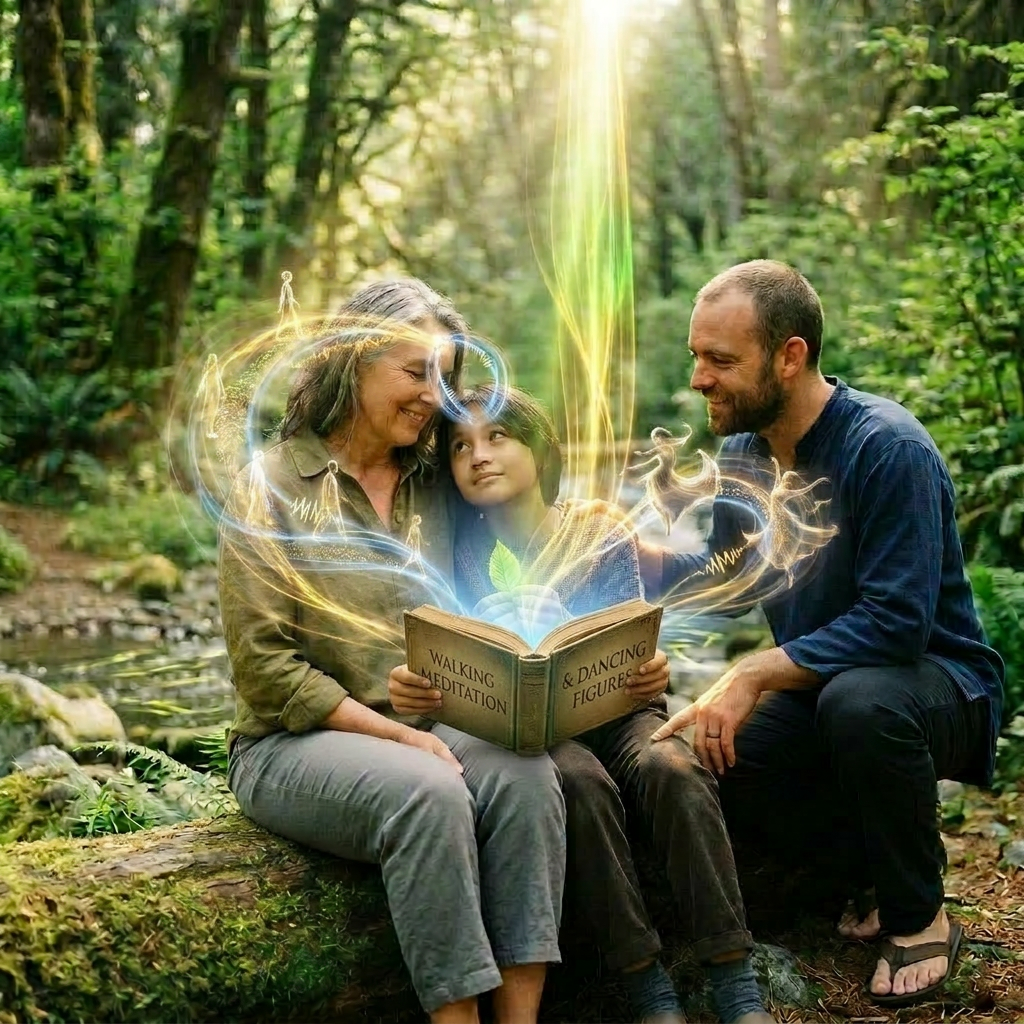
Rather than approaching health through symptoms alone, or the arts as objects of contemplation, the book adopts a practice‑led perspective. Listening, voicing, walking, cutting, collaging, drawing, reading, and dialoguing are treated as media—repeatable, situated activities through which perception stabilises, affect is regulated, and meaning returns, often indirectly and relationally. In this sense, the book reframes body–mind interaction as something that is done, not merely theorised.
➡️ The volume is published by IGI Global and is available here:
🔗 https://www.igi-global.com/book/exploring-body-mind-interactions-their/372473
Well‑being as a dynamic ecology
Central to the volume is a concise, plural understanding of well‑being. Following the WHO and OECD frameworks, well‑being is approached not as a fixed state but as a dynamic process—what the book terms well‑becoming. Well‑being emerges at the intersection of somatic, affective, social, cultural, and environmental factors, and takes shape within what the volume conceptualises as ecologies of well‑being: relational networks in which individuals, practices, communities, and environments continuously co‑constitute one another.
Arts‑based and embodied practices are thus understood as ecological interventions. They do not operate in isolation, nor do they promise to erase difficulty. Instead, they offer ways of living difficulty otherwise—through attentional, somatic, narrative, and creative exercises that can be adapted across settings.
From conference to collective volume
The book originated in an international conference held at Kyushu University during Asia Week in November 2024 (Body–Mind Interactions in Arts, Health, Literatures, and Sciences: Asian and Indo‑Oceanian Perspectives), mainly organised by Charlène Clonts, as part of the Well‑Being with Arts research project. That context shaped two intersecting axes that continue to structure the volume:
- body–mind practices and holistic theories, with particular attention to transcultural circulations, and
- the experience of the arts—performance, sound, text, visual practices, and arts of balance—understood in their performative and transformative dimensions, embedded in social, material, and natural environments.
While acknowledging this origin, the volume also brings together additional contributions that extend and deepen these questions, resulting in a four‑part architecture that moves from theoretical foundations to narratives, cultural perspectives, and practical applications.
Practice ecologies rather than methods
What unifies the diversity of approaches in the book is not a single method, but a family of practice ecologies. Voice and breath, movement and material engagement, attentive reading, listening, dialogue, and environmentally situated action are examined as ways of reorganising body–mind relations with and through culture.
Across disciplines—from health humanities and neuroscience to literary studies, performance, anthropology, and the arts—the contributions insist on a double commitment: to rigour and accountability, and to the irreducible complexity of lived, embodied experience. Holistic practice is neither romanticised nor reduced to technique; it is situated, culturally responsive, and attentive to ethical conditions of transfer.
For whom—and for what kinds of use?
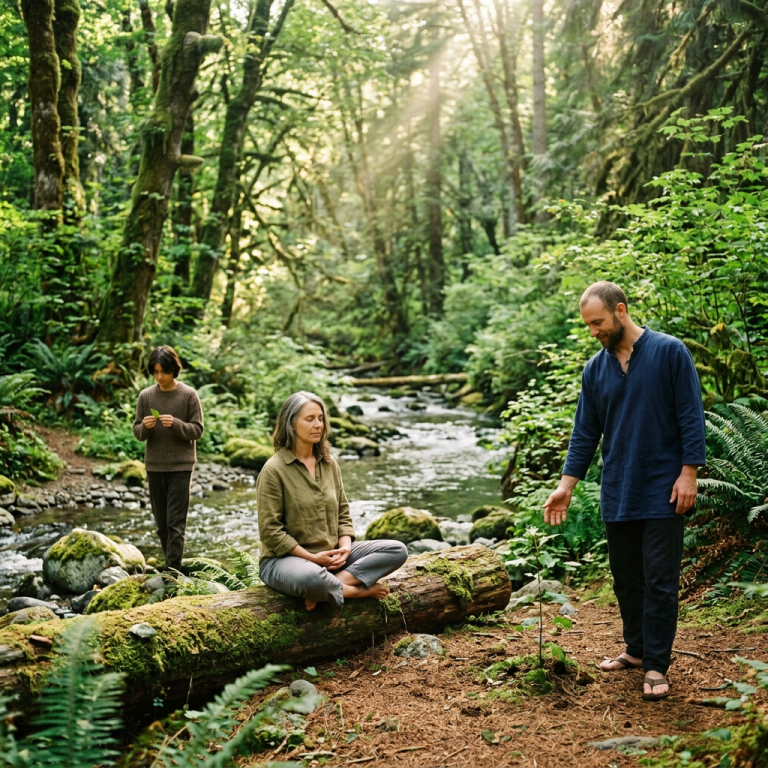
The volume is addressed to scholars and students in medical humanities, cultural studies, psychology, literature, music and performance studies, anthropology, and public health, as well as to artists, educators, therapists, and practitioners working in community, health, and educational contexts. Its design supports multiple modes of reading—from conceptual grounding to case‑based analysis and transferable protocols—while maintaining a coherent trajectory throughout.
Ultimately, Exploring Body–Mind Interactions and Their Impact on Well‑Being: Holistic Practices advances a modest yet demanding wager: that well‑designed practices—sometimes minimal in appearance—can reorganise attention, regulation, and relation in lasting ways. If listening slows time, if movement reopens perception, if narrative restores relational space, then body–mind interaction becomes not a problem to solve, but a capacity to cultivate.
🔗 Publisher page (IGI Global):
https://www.igi-global.com/book/exploring-body-mind-interactions-their/372473
 Well-Being with Arts project